
In recent years, sustainable packaging has become an increasingly frequent topic of discussion, especially following the growing importance of sustainability issues for society and businesses. Today's packaging must not only fulfil its classic function of protecting the product, but must also meet other requirements and be, as well as functional, also low impact on the environment.
Europe produces 88 million tonnes of packaging every year. Managing it therefore becomes a fundamental factor in achieving the circular economy objectives set by the European Union. Several regulations and initiatives have been put in place for this reason, in order to promote proper management of the production and disposal of packaging materials, reducing the environmental impact they cause.
In this context, the use of sustainable packaging becomes an important strategic choice, both for companies and consumers, in order to reduce environmental impact and comply with European regulations.
In this article we will discuss sustainable packaging, the benefits it can bring and the relevant European regulations.
What is meant by sustainable packaging?
When we talk about sustainable packaging, we mean packaging designed and made following ESG principles, with the aim of minimising environmental impact throughout the entire life cycle, from production through to final disposal. However, the reduction of environmental impact and the use of sustainable materials must not compromise the essential functions of the packaging, namely protecting the contents during transport and preserving its properties.
This type of packaging usually uses ecological, recyclable, biodegradable or compostable materials, often derived from renewable sources.
Sustainable packaging must therefore meet certain fundamental criteria:
- Use of recycled, recyclable or biodegradable materials from renewable sources.
- Reduction of packaging weight and volume to minimise waste and transport costs.
- Ease of disposal through design intended to facilitate separate waste collection.
- Circular design, which allows packaging to have a second life even after its first use.
The development of sustainable packaging touches on several areas, from initial design through to logistics and final recycling. It therefore becomes essential to carry out careful design and provide clear instructions for disposal of the packaging itself.
Sustainable packaging: some examples
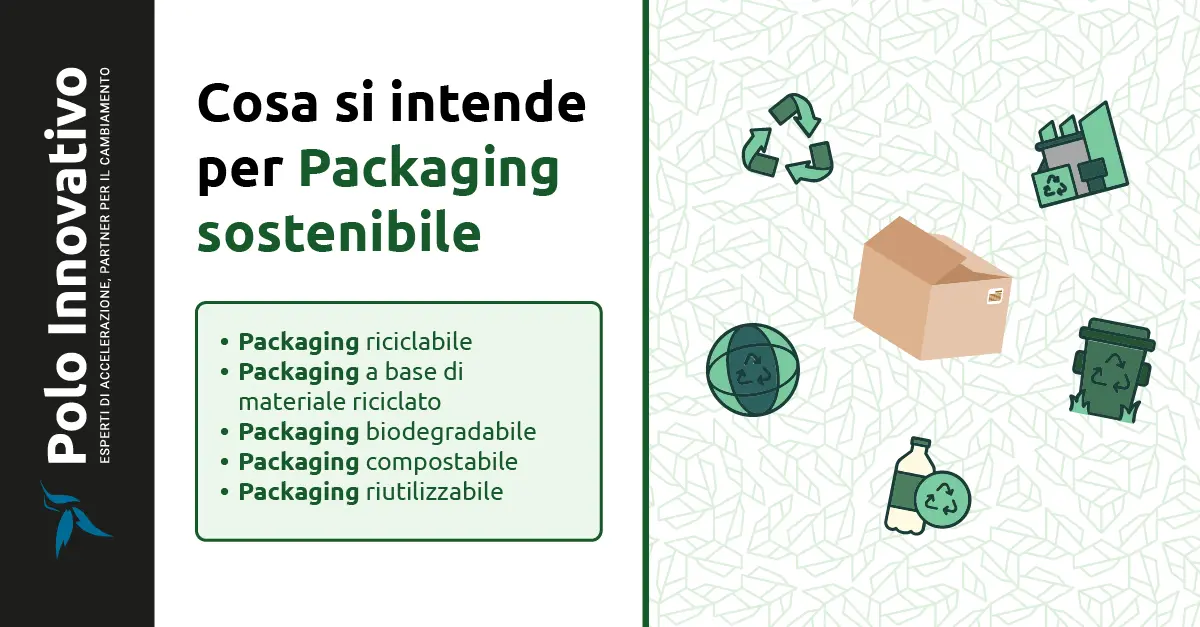
Sustainable packaging can take various forms depending on the materials used and the intended life cycle. Here are some practical examples:
- Recyclable packaging: packaging that can be recycled and transformed into new raw materials and products once its use has ended. Classic examples are paper, cardboard, glass and aluminium. The main advantage in this case is the possibility of reducing waste and keeping materials circulating in the economy.
- Recycled-material packaging: this type of packaging is made from raw materials from previous production cycles, such as recycled plastic or paper. This approach makes it possible to reduce the use of new resources, lowering the overall environmental impact in the product life cycle.
- Biodegradable packaging: made from natural materials such as corn starch, cellulose or hemp, it degrades naturally in the environment without releasing harmful substances.
- Compostable packaging: compostable materials can be disposed of in organic waste and transformed into compost, i.e. a natural fertiliser. For example, paper or cardboard packaging can be composted.
- Reusable packaging: designed to be used multiple times, significantly reducing waste production. For example, fabric bags, glass or aluminium containers and refillable bottles represent increasingly widespread solutions, capable of combining practicality and sustainability.
In addition to the material used for packaging production, it is important to also study and design the dimensions and weight of the packaging. The use of lightweight packaging helps to reduce environmental impact, as it wastes fewer resources and requires less energy for production and transport.
Sustainable packaging: the benefits
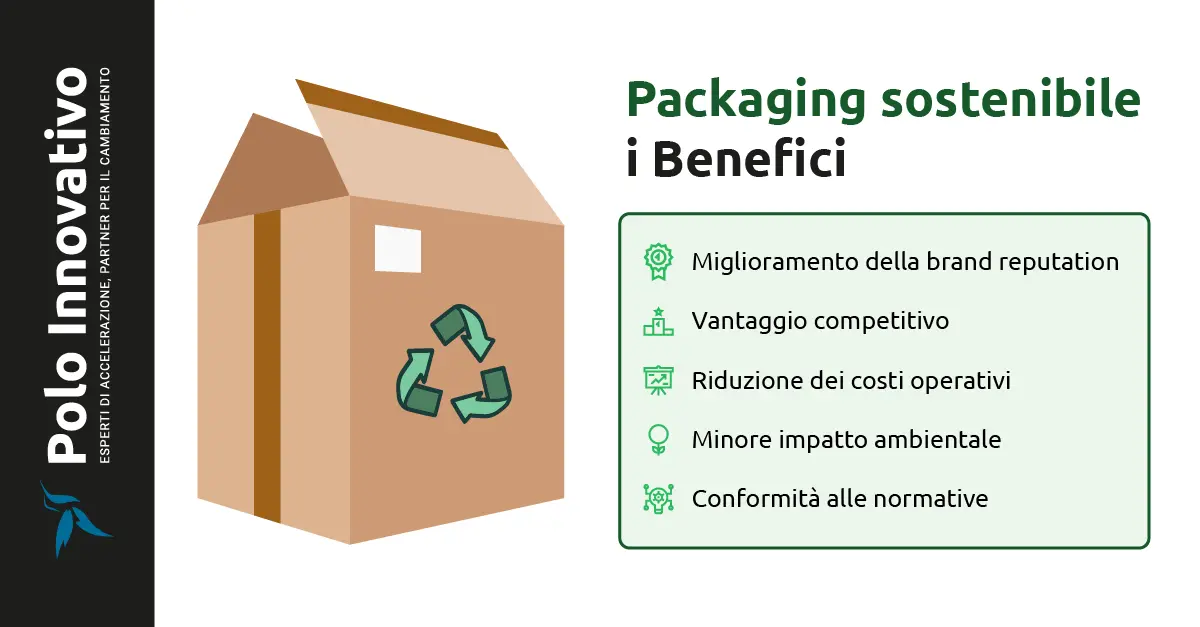
Investing in sustainable packaging does not only offer benefits from an ethical and environmental point of view, but represents a genuine strategic decision capable of bringing concrete benefits to businesses. Here are some examples:
Improved brand reputation
Awareness of ESG issues is increasingly widespread among consumers. The use of sustainable packaging is one of the factors capable of immediately communicating a company's values.
Consumers increasingly recognise and appreciate companies that demonstrate social responsibility and commitment to the environment. Transparency and commitment to ESG issues build trust and loyalty towards the brand.
Competitive advantage
More and more consumers evaluate the impact of their decisions when purchasing a product. From this point of view, sustainable packaging represents a differentiating and decisive element.
For this reason, companies that adopt eco-friendly solutions manage to capture a larger share of the market compared to those that are less transparent and less attentive to sustainability.
Reduction of operating costs
Although there may be initial investments, sustainable packaging is capable of generating significant economic savings in the long term. The reduction in the weight and volume of packaging, in fact, leads to lower transport costs, lower logistics costs and optimisation of resource use.
Furthermore, the use of recyclable, biodegradable or compostable materials allows rationalisation of investments in procurement and management.
Lower environmental impact
The use of recyclable and biodegradable materials directly contributes to reducing the accumulation of waste and the intensive exploitation of resources needed to produce packaging. The use of sustainable packaging helps to reduce environmental impact and preserve natural resources.
Regulatory compliance
The latest European regulations impose various objectives on companies with regard to sustainability and sustainable packaging. Complying with these guidelines and having an internal structure ready to adapt to any changes avoids the risk of penalties and keeps the company competitive in the market.
Sustainable packaging: the European regulatory context
The reference regulation for sustainable packaging is EU Regulation 2025/40, also known as the PPWR (Packaging and Packaging Waste Regulation), which replaces Directive 94/42/EC. The Regulation entered into force on 11 February 2025 and will apply from 12 August 2026.
This regulation introduces stricter obligations for various aspects relating to packaging, including reuse, recyclability, recycled material content and certain prohibitions and requirements. It is essential that Italian companies prepare to meet the requirements of the regulation, avoiding risks and remaining competitive.
The plan aims for a reduction in packaging waste of 5% by 2030, 10% by 2035 and 15% by 2040. One of the objectives also includes the reduction of weight, volume and empty space, by redesigning packaging and evaluating alternative materials. This will lead to a significant reduction in the quantity of dispersed materials.
Furthermore, from 1 January 2030 a minimum recycled material content is planned for packaging placed on the European market. In particular, the percentages to be met will be as follows:
- 30% for contact-sensitive PET plastic packaging (such as food packaging and medical supplies).
- 10% for non-PET contact-sensitive packaging.
- 30% for single-use plastic bottles for beverages.
- 35% for other types of plastic packaging.
These percentages are set to increase from 2040.
Some important objectives have also been outlined with regard to the circular economy. Indeed, by 2030 at least 40% of transport packaging (including that relating to e-commerce) will need to be reusable. This means that companies will need to develop an organised reuse system for their packaging.
The percentages will rise to 70% by 2040, promoting a concrete commitment to the circular economy.
Furthermore, packaging used for storage and distribution will need to have a 10% reusable materials percentage by 2030 and 40% by 2040.
A harmonised labelling requirement for packaging is also planned by 2028, providing clear and transparent information regarding the materials used, recyclability and correct disposal.
EU Regulation 2025/40 will require companies to review their processes in line with the new regulations, improving packaging design and revising the entire logistics and packaging supply chain, integrating reuse systems and developing a traceability system. This may require significant initial investments, but will also bring economic advantages in the medium to long term.
Sustainable packaging: conclusions
Sustainable packaging represents a concrete step towards a greener and more sustainable economy. Companies are called upon to take action to reduce their impact also with regard to the packaging supply chain, adapting their processes to the new guidelines.
The European Union has defined concrete initiatives that will be able to deliver a remarkable impact in terms of sustainability and the reduction of waste and emissions. Companies will need to make strategic investments, but will also be able to obtain enormous benefits, both in economic terms and with regard to their reputation.
